People are often described as deeply selfish as if it were a fixed trait, something a person either has or does not. Developmental research on where helping behavior actually comes from tells a more specific and, in some ways, more hopeful story: very young children start out with a genuine, unprompted pull toward helping others, and what happens to that pull afterward has a lot to do with how the adults around them respond to it.
In 2006, the psychologists Felix Warneken and Michael Tomasello published a study in the journal Science testing whether toddlers would help a stranger with no instruction, no request, and no reward on offer. Eighteen-month-olds were placed in ten different situations where an adult they had just met appeared to need help, dropping an object out of reach, struggling with a cabinet door, and so on. Across most of these situations, the toddlers helped, immediately and without being asked, at rates well above children in a matched control condition where no help was actually needed. This was one of the first clear experimental demonstrations that the impulse to help another person shows up in children before they can reliably talk about fairness, kindness, or any of the concepts adults use to describe generosity.
The harder finding: what happens when helping gets rewarded
Table of Contents
A follow-up study is the part of this research that complicates any simple story about raising a generous child. In a 2008 study published in Developmental Psychology, Warneken and Tomasello gave 20-month-olds the chance to help an adult, then divided the children into groups: some received a small material reward each time they helped, some received verbal praise, and some received nothing at all. In a later phase, with no rewards offered to anyone, the children who had previously been given material rewards helped less than the children who had received praise or no reward at all.
This is one study, with a specific age group and a specific kind of reward, not a blanket rule that any praise or reward always backfires. The detail worth sitting with is that the drop-off in later helping showed up specifically in the group that received a material reward, a small toy, not in the group that received verbal praise. The praised children kept helping at rates similar to the children who received nothing at all. That is a meaningfully narrower finding than “rewarding kindness ruins it”: it points toward material rewards for a spontaneous act as the specific ingredient that seemed to interfere, not acknowledgment itself. The pattern it found, sometimes called the overjustification effect, is a real and specific caution: when a spontaneous, intrinsically motivated behavior gets treated as something that needs an external payoff to happen, children can start to need that payoff going forward, and the original, unprompted motivation can quietly fade.
Why this connects to how we talk about sharing at home
This lines up closely with the process-over-product thinking that shows up often in how we approach art and creative play with children, and it turns out to apply just as directly to generosity. A child who helps a sibling, shares a toy, or offers comfort because a parent is watching and ready to hand out a sticker is learning something different than a child whose help was met with recognition of what they did, without turning that recognition into a transaction. “Thank you for sharing your blocks, that was kind” describes something the child actually did. A sticker chart for sharing risks teaching a child that generosity is the price of admission to a reward, not something worth doing because it helps another person, which is closer to where the behavior appears to start in the first place, according to Warneken and Tomasello’s research.
None of this means praise is dangerous or that rewards can never be used thoughtfully. A single sticker for a single kind act is not going to undo a child’s capacity for generosity. What the research suggests is a pattern worth being aware of over time: treating a child’s spontaneous kindness as something that always needs an external prize attached risks nudging a genuinely other-directed impulse toward a more transactional one.
What this looks like on an ordinary afternoon
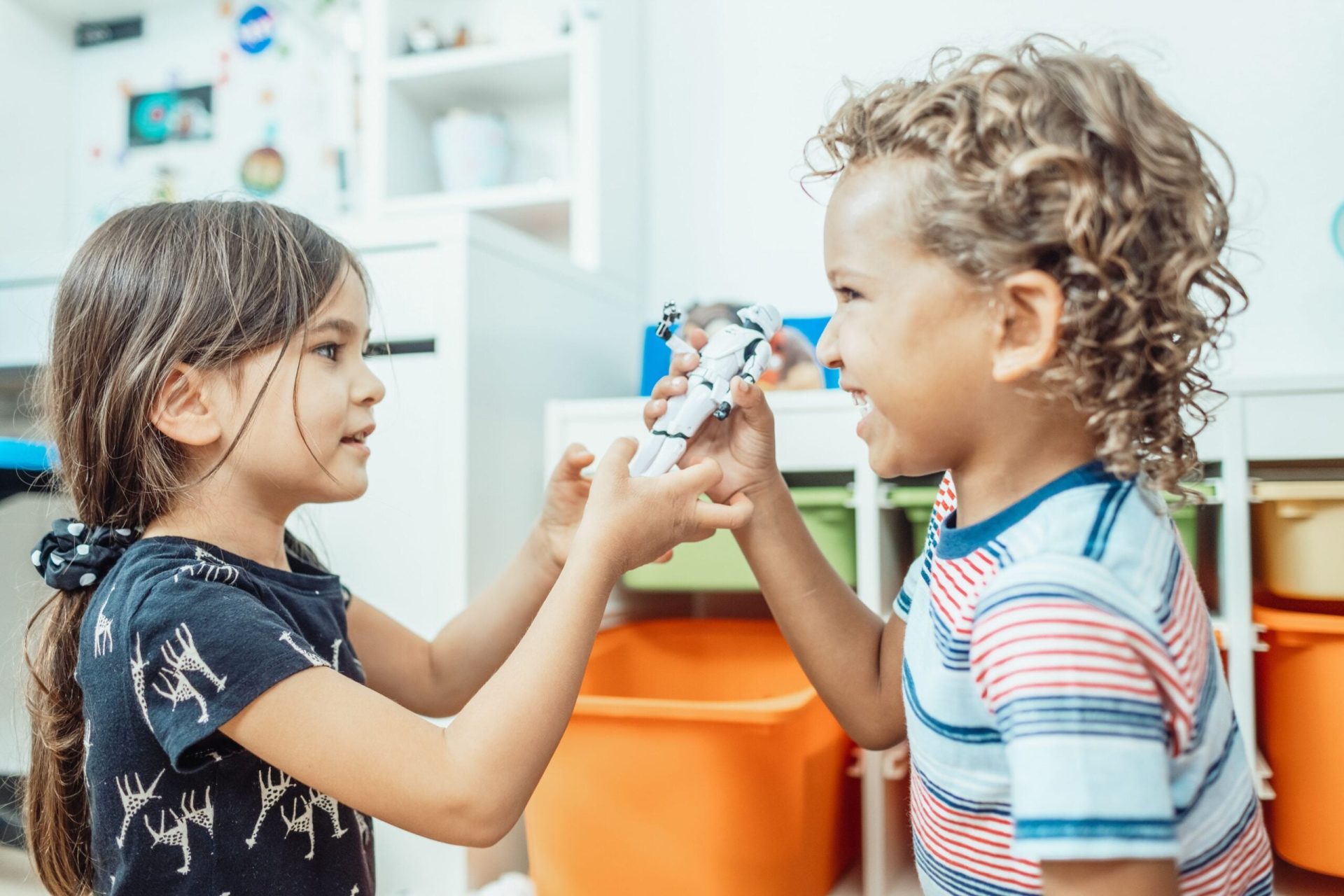
Translated into an actual moment at home, a sibling handing over a favorite toy without being asked, or a child noticing a friend is upset and bringing over a stuffed animal unprompted, the research suggests these moments are closer to the child’s baseline wiring than to an unusual accomplishment that needs a big celebration to reinforce it. Warneken and Tomasello’s toddlers were not coached into helping. They did it because an adult clearly needed something, and that was enough.
That reframes what a parent’s response might usefully do in the moment. Naming what happened, “you noticed your brother needed help and you helped him,” describes the specific act and keeps the focus on the other person who was helped, rather than routing the moment through the child’s own reward. It is a subtle shift, but it is the same shift already familiar from thinking about praise and creative work: noticing the specific, real thing a child did, instead of turning the moment into a performance that earns a payoff.
What this does not prove
Neither study followed these children into adulthood, so this research cannot say whether a rewarded 20-month-old grows up to be a less generous or more self-focused adult; that is a much longer causal chain than either study was built to test. The studies also examined a narrow, specific kind of helping, physical assistance with a concrete task, rather than the fuller range of behaviors adults mean when they call someone deeply selfish. What the research does show, clearly and repeatedly across these experiments, is that the starting point for most children is not selfishness at all. It is an early, genuine pull toward helping, one that adult responses can support, reroute, or quietly undercut long before a child is old enough to explain why they do or do not want to share.
The post In a 2006 study, 18-month-old toddlers helped a stranger who needed assistance across most of ten tasks without being asked or rewarded, but a 2008 follow-up found material rewards for helping later reduced how often toddlers helped appeared first on The TheTrendyType.