
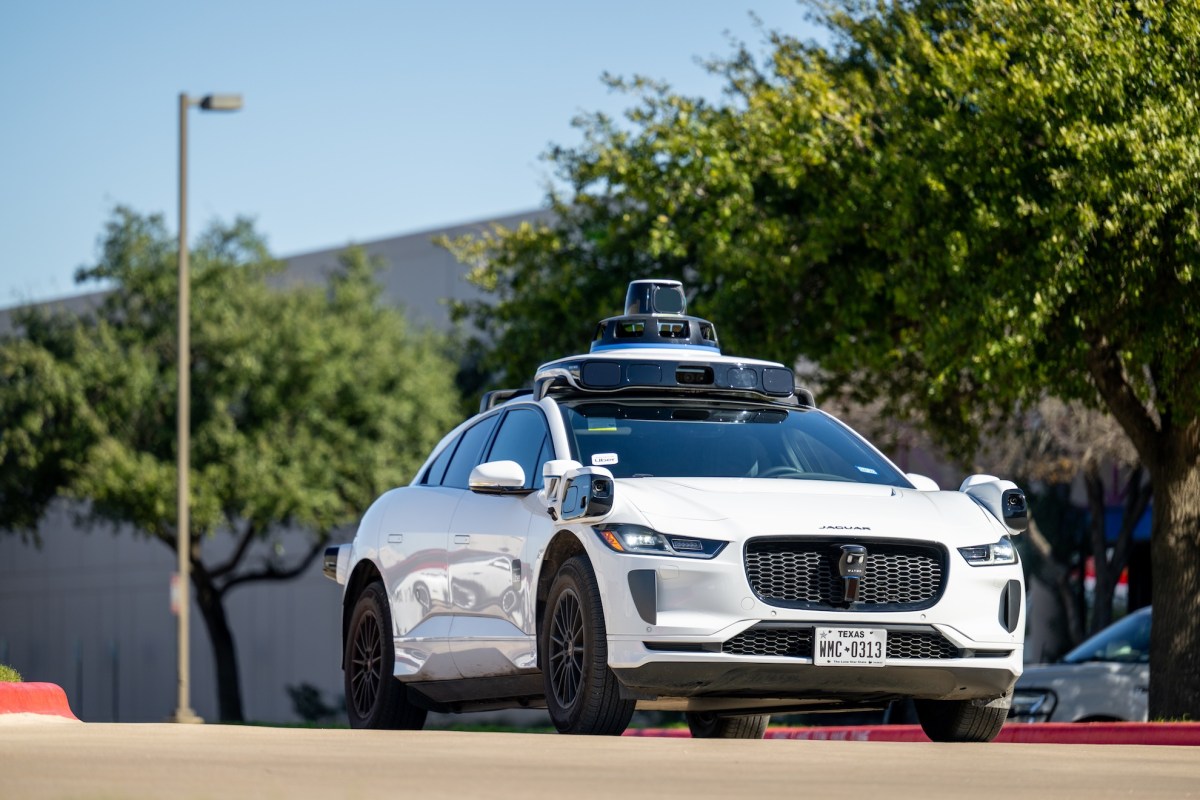
## The Unexpected Glitch in the Driverless Future: When Autonomous Cars Need a Helping Hand
It remains a captivating feat of engineering: Waymo’s self-driving vehicles are now providing passenger transport in six cities across the united States. However, the path to a fully autonomous future isn’t without its quirks. A recently discovered vulnerability highlights a surprisingly simple way to immobilize thes advanced machines – an open door.
This seemingly minor issue has led to some unusual gig-economy requests, blurring the lines between customary delivery services and remote vehicle assistance. A recent post on Reddit detailed a peculiar offer received by a DoorDash driver. Instead of delivering food, the driver was presented with a $6.25 task to travel less than a mile to a Waymo vehicle and ensure its door was securely closed. Upon “verified completion” of this task, an additional $5 was promised.
### The Door-Closing Dilemma: A Software Snag
The incident underscores a critical dependency in Waymo’s current system. The vehicles are programmed with a safety feature that prevents operation if a door is detected as being open.While a sensible precaution for human-operated vehicles, it appears the system isn’t robust enough to differentiate between a genuine safety concern and a temporary glitch. This reliance on a physical state – a closed door – creates a single point of failure,effectively halting the vehicle’s functionality.This isn’t merely a theoretical problem. Reports suggest that environmental factors, such as strong winds or minor mechanical issues, can occasionally trigger the door-open detection, rendering the vehicle immobile. This necessitates a remote intervention, and in this case, a gig worker was recruited to resolve the issue.
### Implications for Autonomous Vehicle growth
The incident raises vital questions about the maturity of autonomous vehicle technology. While self-driving cars excel at complex navigation and obstacle avoidance, they can be surprisingly vulnerable to seemingly trivial issues. This highlights the need for more complex sensor fusion and error handling capabilities.
Furthermore, it points to the evolving role of remote assistance in the autonomous vehicle ecosystem. As these vehicles become more prevalent, we can expect to see the emergence of specialized services dedicated to resolving unexpected issues and providing remote support. This could range from simple tasks like closing a door to more complex troubleshooting and diagnostics.
### the Future of Mobility: beyond self-Driving
the incident serves as a reminder that the transition to a fully autonomous future won’t be seamless. It’s a complex undertaking that requires ongoing innovation, rigorous testing, and a willingness to address unexpected challenges.
As we move forward,it’s crucial to prioritize safety,reliability,and user experience. This means developing robust systems that can handle a wide range of scenarios and providing seamless support when things go wrong.
For those interested in learning more about the latest advancements in automotive technology, explore our guide to the future of automotive technology. and if you’re considering investing in the electric vehicle market, be sure to check out our analysis of electric vehicle market trends. for a deeper dive into the ethical considerations surrounding autonomous vehicles, read our article on autonomous vehicle ethics.
The Unexpected Partnership: Waymo & DoorDash Solve a Self-Driving Car Problem
The Rise of Robotaxis and Unexpected Operational Challenges
Table of Contents
- The Rise of Robotaxis and Unexpected Operational Challenges
- A Unique Solution: Leveraging the Gig Economy
- how the Partnership Works: A Win-Win Scenario
- The Importance of Fleet Efficiency in Autonomous Vehicle Operations
- Beyond door Closure: The potential for Future Collaboration
- The Future of Autonomous Vehicle Support: A Human-in-the-Loop Approach
- The Unexpected Costs of Autonomous Vehicle Operation: Beyond the Technology
- The “Human-in-the-Loop” Reality
- Why Even Minor Issues Demand Immediate attention
- The Broader Economic Impact of “Edge Cases”
- Investing in Proactive Solutions & Enhanced Technology
Waymo, a frontrunner in autonomous vehicle technology, recently secured a ample $16 billion investment to expand its driverless car services internationally. This funding signals a significant step towards the widespread adoption of robotaxis, promising to revolutionize urban transportation. However, even the most advanced technology can encounter unforeseen hurdles. It turns out that a surprisingly simple issue – a car door left ajar – was temporarily stalling Waymo’s operations in Atlanta.
A Unique Solution: Leveraging the Gig Economy
In a move that highlights the adaptability of the modern gig economy, Waymo partnered with DoorDash to address this peculiar problem. A recent post circulating on Reddit revealed that Waymo was offering DoorDash drivers extra compensation to simply close the doors of its autonomous vehicles. this seemingly bizarre collaboration isn’t a glitch,but a deliberate strategy to maintain operational efficiency.
how the Partnership Works: A Win-Win Scenario
Waymo and DoorDash confirmed the authenticity of the arrangement.The pilot program, initiated earlier this year, leverages the proximity of DoorDash drivers already navigating city streets. When a Waymo vehicle detects a door isn’t securely closed – preventing it from commencing or continuing its route – a notification is sent to nearby Dashers. These drivers then recieve a small incentive to quickly resolve the issue, allowing Waymo to keep its fleet moving.
The Importance of Fleet Efficiency in Autonomous Vehicle Operations
Maintaining a high level of fleet efficiency is paramount for the economic viability of autonomous vehicle services. Even minor delays can accumulate, impacting the overall profitability and scalability of the operation. This partnership demonstrates a creative approach to problem-solving, utilizing readily available resources to overcome a surprisingly low-tech obstacle.
Beyond door Closure: The potential for Future Collaboration
While currently focused on door closure, the collaboration between Waymo and DoorDash could potentially expand to encompass other minor operational tasks. This could include assisting with vehicle positioning or reporting minor obstructions. The partnership showcases the potential for synergistic relationships between autonomous vehicle companies and gig economy platforms, creating new opportunities for innovation and service delivery.
The Future of Autonomous Vehicle Support: A Human-in-the-Loop Approach
This unusual collaboration underscores the importance of a “human-in-the-loop” approach to autonomous vehicle deployment. While the goal is full autonomy, there will inevitably be situations requiring human intervention. Leveraging the existing infrastructure of gig economy platforms provides a cost-effective and scalable solution for addressing these challenges. If you’re interested in learning more about the advancements in autonomous vehicle technology and its impact on urban mobility, check out our detailed guide.
This partnership is a captivating example of how technology and the gig economy are converging to shape the future of transportation. For those considering the implications of this shift on future of work,our analysis provides valuable insights.And if you’re curious about the broader landscape of smart city initiatives, we offer a extensive overview of the latest trends and developments.
The Unexpected Costs of Autonomous Vehicle Operation: Beyond the Technology
The rollout of autonomous vehicles (AVs) is frequently enough framed as a technological leap forward, promising increased efficiency and convenience. However, a closer look reveals a surprisingly human element impacting operational costs – specifically, the need for dedicated personnel to address seemingly minor, yet critical, issues. Recent partnerships, like the one between Waymo and DoorDash offering autonomous delivery in Phoenix, Arizona, highlight this often-overlooked aspect of AV deployment. While the technology is remarkable, maintaining a functional fleet requires more than just sophisticated algorithms and sensors.
The “Human-in-the-Loop” Reality
The narrative around self-driving cars frequently enough emphasizes their independence. Though, current AV operations aren’t truly autonomous in the purest sense. They rely on a network of remote support staff and on-site personnel to handle situations the vehicle can’t resolve independently. A recent report from the Autonomous Vehicle Safety Consortium revealed that approximately 15% of all AV trips require some form of human intervention, even if it’s just remote assistance.
This intervention isn’t limited to complex emergencies. Simple issues, like a door left ajar, can bring an entire operation to a standstill.Waymo, for example, has reportedly implemented a policy of compensating individuals to physically close AV doors. This seemingly trivial task is crucial because an open door prevents the vehicle from safely and legally continuing its route, effectively halting service and impacting delivery schedules.
Why Even Minor Issues Demand Immediate attention
The sensitivity to even minor malfunctions stems from the stringent safety protocols governing AV operation.Unlike a human driver who might briefly navigate with a slightly open door, an AV’s systems are programmed to prioritize absolute safety. Any deviation from optimal conditions triggers a halt, preventing potential hazards and ensuring compliance with regulations.
Consider the implications for a delivery service like DoorDash.A single immobilized vehicle can disrupt multiple deliveries, leading to customer dissatisfaction and financial losses. The cost of dispatching someone to close a door, while seemingly small, quickly adds up when multiplied across an entire fleet operating hundreds or even thousands of vehicles. This is especially true in densely populated urban environments where even a momentary obstruction can cause significant traffic congestion.
The Broader Economic Impact of “Edge Cases”
The need to address these “edge cases” – unusual or unexpected situations – has significant economic implications for AV companies. It necessitates a dedicated workforce, adding to operational expenses and impacting profitability. Moreover, it highlights the limitations of current AV technology and the ongoing need for refinement.
Beyond direct labor costs, there are also indirect expenses associated with downtime, logistical delays, and potential damage to reputation. A recent study by the University of California,Berkeley,estimated that addressing edge cases accounts for as much as 30% of the total cost of operating an AV fleet.This figure underscores the importance of proactive problem-solving and the development of more robust and adaptable AV systems.
Investing in Proactive Solutions & Enhanced Technology
To mitigate these costs, AV companies are exploring several strategies. These include:
* Improved Sensor Technology: Developing more accurate and reliable sensors to detect and address potential issues before they escalate. This ties into our discussion of advanced sensor solutions.
* Predictive Maintenance: Utilizing data analytics to identify potential maintenance needs and proactively address them before they lead to breakdowns.
* Enhanced Remote Assistance: Improving the capabilities of remote assistance teams to diagnose and resolve issues more efficiently.
* Redundant Systems: Incorporating redundant systems to ensure continued operation even in the event of a component failure.
ultimately, the success of autonomous vehicle technology hinges not only on technological innovation but also on a comprehensive understanding of the operational realities and the economic implications of addressing even the smallest of issues. Understanding the total cost of ownership,including these often-overlooked factors,is crucial for investors and consumers alike. For more data on the future of transportation, explore our insights on the future of transportation and the autonomous vehicle market.
!Waymo Vehicle Delivering Food
# The Unexpected Human element in Self-Driving Cars: Waymo and the Gig Economy
## The Curious Case of Stuck Doors and On-Demand Assistance
The rise of autonomous vehicles promises a future of seamless, robotic transportation. However, even the most advanced technology occasionally requires a helping hand – and in the case of Waymo, that hand belongs to gig workers.Recent reports reveal that Waymo, Alphabet’s self-driving technology company, is utilizing on-demand service providers to address a surprisingly common issue: doors that won’t close properly.
This isn’t a matter of complex engineering failures, but rather a quirk of the current vehicle design. Passengers sometimes struggle to fully latch the doors, triggering alerts and temporarily halting the autonomous journey. Instead of recalling vehicles or redesigning the door mechanisms, Waymo has turned to a unique solution: paying individuals to assist stranded passengers.
## From Robotics to Real-World assistance: How It Works
Waymo’s approach involves dispatching assistance through platforms like DoorDash. When a passenger encounters a door issue, a local DoorDash driver is sent to the vehicle to manually close the door, allowing the ride to continue. this seemingly low-tech fix highlights the challenges of integrating fully autonomous systems into the unpredictable real world.
The practice isn’t limited to Atlanta,where the initial reports surfaced. In Los Angeles, Waymo has partnered with Honk, a towing and roadside assistance app, to provide similar services. This collaboration demonstrates a proactive approach to addressing operational hiccups and ensuring a positive passenger experience.Interestingly, the compensation for this simple task varies by location. Reports indicate that Honk users in L.A. have been offered up to $24 for closing a Waymo door – more than double the amount received by Atlanta DoorDash drivers. This discrepancy likely reflects local market rates and demand for on-demand services.
## The Future of Autonomous Vehicle Support: A Hybrid Approach
While this reliance on gig workers might seem counterintuitive for a technology company aiming for full automation, it’s a pragmatic solution for the present. Waymo acknowledges the issue and has stated that future vehicle iterations will feature automated door closures. However, until those vehicles are deployed, human assistance remains a crucial component of their operations.This situation underscores a broader trend in the development of autonomous systems: the need for a hybrid approach. While robots can handle many aspects of transportation, human oversight and intervention will likely remain necessary for the foreseeable future. Consider the complexities of navigating unexpected weather conditions or responding to unforeseen obstacles – these scenarios often require human judgment and adaptability.
For companies like Waymo, effectively integrating human support into their autonomous systems is essential for building trust and ensuring a safe and reliable transportation experience. This also presents opportunities for innovative service models and partnerships, as demonstrated by their collaborations with DoorDash and Honk.
If you’re interested in learning more about the evolving landscape of autonomous vehicles and the technologies driving this revolution,explore our comprehensive guide to autonomous vehicle technology. And for those considering the implications of this shift on urban planning and infrastructure, our article on smart city infrastructure provides valuable insights. if you’re curious about the ethical considerations surrounding self-driving cars, check out our discussion on ethical AI in transportation.